Bookmatching: The Art of Symmetry in Design
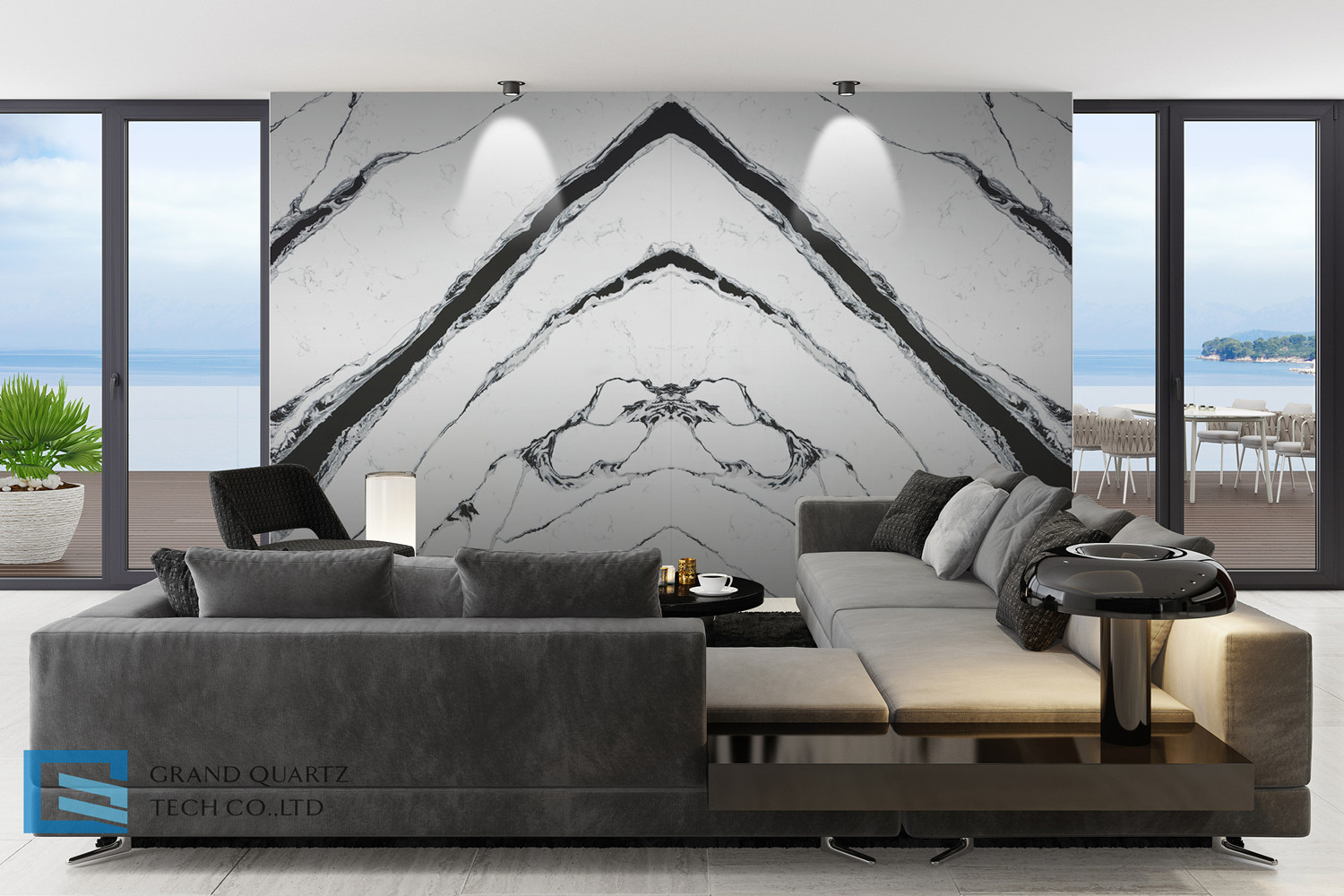
Bookmatching is the process of adjoining two or more slabs in such a way that they mirror each other, creating a stunning, symmetrical design reminiscent of an open book. This highly stylistic design choice has become a popular trend among designers and architects. While it is typically applied to wall claddings, bookmatching also offers an equally captivating presentation when used for flooring or even countertops. Its artistic display makes it a desirable solution for feature walls, allowing those who seek to make a statement in their designs to showcase the beauty of symmetry.
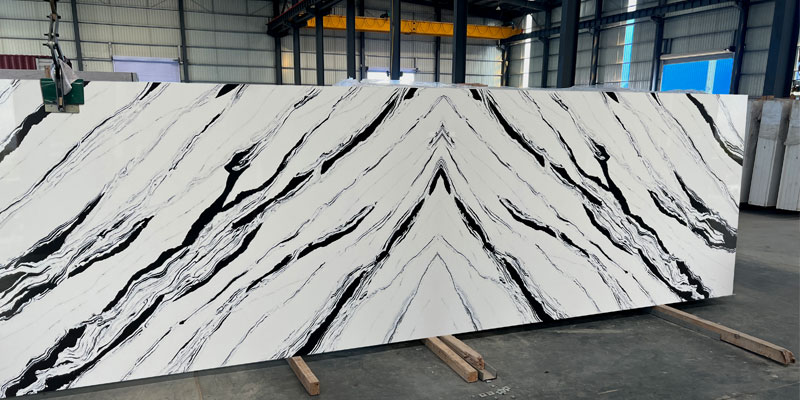
Slabs can also feature continuous veining, as shown in the photo below. In this instance, the veining patterns flow seamlessly from one piece to the next across multiple slabs, enhancing the visual impact and elegance of the space.
At the heart of Grand Quartz Tech's specialty lies its remarkable collection of bookmatched quartz slabs. By meticulously selecting and mirroring quartz pieces, the company creates seamless patterns where veins and movements elegantly transition from one slab to another. This technique results in breathtaking visuals, reminiscent of the pages of an open book—hence the term "bookmatch."
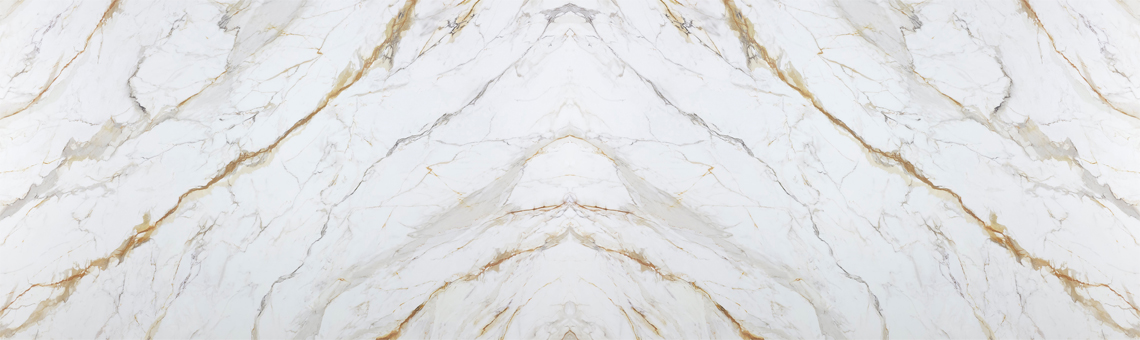
(Infinity Beauty of Bookmatched Calacatta Quartz)
Versatility in Bookmatching
One of the greatest advantages of bookmatching is that it is not limited to one type of material. This effect is achievable with both natural and engineered surfaces. However, materials with prominent veins and dynamic movements are preferred, as they better emphasize the striking symmetry.
For example, bookmatching a pair of Calacatta marble slabs creates a design that is unparalleled in spectacle. Meanwhile, engineered materials such as quartz and porcelain are specifically designed to achieve perfect symmetry, offering durability alongside aesthetic appeal.
Grand Quartz Tech’s product lines feature a variety of colors and patterns, ensuring that designers can bring their artistic visions to life with precision and style.
Comments
Post a Comment